
Anger and thoughts of revenge are common reactions for men who’ve experienced sexual abuse or assault. While these responses are understandable, if left unaddressed, they have the potential to take hold and negatively impact our health, relationships, and overall well-being.
This article explores practical ways to understand and deal with anger, as well as how to respond to thoughts of revenge in ways that prioritize your personal and relational well-being.
- Part One: Dealing with Anger
- Part Two: Dealing with Thoughts of Revenge
Prioritize your well-being: At StrongAfter, we recognize that talking about the impacts of trauma, including anger and thoughts of revenge, can be challenging. Make sure to go through this information at your own pace and make use of the StrongAfter Strength Toolkit as additional support.
Part One: Dealing With Anger
Anger Is a Common and Complex Emotion
Anger is a normal human emotion that can show up in our everyday life. At times, it can signal that something isn’t right; that a boundary has been crossed or an injustice has occurred.
For men who’ve had unwanted or abusive sexual experiences, anger can manifest in powerful ways. It might flare up suddenly or bubble quietly in the background. It can be linked to specific memories, people, or situations, or it may seem to come out of nowhere.

Given that anger appears in all our lives at different times, we can all benefit from developing an awareness of anger, how it operates, and how to better manage it.
Anger Is Not the Same as Aggression
First things first: Anger is a feeling. Aggression is a behavior.
Feeling angry does not mean you need to act aggressively. While experiencing anger may not be a choice, how you respond to it is. Developing skills to pause, regulate, and respond differently is key.
Anger as a Response to Sexual Violence
The pain, manipulation, and injustice of unwanted or abusive sexual experiences can understandably bring up intense feelings of anger.
- Being assaulted, abused, or manipulated
- A betrayal of trust
- The person who harmed them “getting away with it”
- A lack of acknowledgment or support for survivors
Anger can sometimes fuel positive action such as advocacy or justice-seeking. But it can also become overwhelming and destructive to our relationships, ourselves, and our lives if it isn’t understood and managed.
If anger is something you’re struggling with, you’re not alone, and you’re not broken. Up next, we’ll explore why anger can be part of the trauma response.
Anger and the Trauma Response
Anger is closely tied to the body’s fight–flight–freeze response. For some people, becoming angry and fighting back may have reduced harm. For others, freezing, complying (sometimes referred to as fawning), or fleeing was what kept them alive.
Feeling ignored, dismissed, or pressured can quickly trigger anger and push you into “fight mode,” even when it no longer serves you.
Men, Anger, and Emotional Funneling

Unfortunately, many men are too familiar with anger and its impacts, having grown up in homes, schools, or peer groups where anger (and sometimes aggression) was modeled as a way to get control or be heard, while vulnerability, fear, sadness, or grief were often discouraged or ignored.
As a result, anger can become a catch-all emotion, covering up deeper feelings like shame, fear, grief, or helplessness; feelings that do not fit with the image of “the strong man,” who should supposedly always be in control of himself and his emotions (including being able to keep anger in check).
- Relationship difficulties caused by frightening or pushing people away
- Outbursts or withdrawal
- Emotional exhaustion
- Anger turned inward (for example, for not speaking out, not fighting back, not coping, and even anger at being angry)
The reality is that too much anger can, unfortunately, shorten our lives.
The Health Costs of Prolonged Anger
Research consistently shows that chronic anger can:
- Increase blood pressure and strain the heart
- Contribute to heart disease and stroke
- Disrupt digestion and gut health
- Weaken the immune system
- Worsen anxiety, depression, and concentration
- Disrupt sleep
Learning to deal with anger isn’t about suppressing it; it’s about developing skills to identify, manage, and express anger and other emotions in healthy, respectful ways. Before looking at how we can do that, it’s useful to separate out anger from aggression.
Expanding Emotional Literacy
Anger is an emotion—one of many emotions. A key to living a rich, full, emotionally engaged life is to expand our emotional literacy.
See our Understanding and Managing Emotions article and podcast for more.
Recognizing Early Signs of Anger
Anger rarely shows up without warning. The key is learning to identify and catch it early. We all have different signs, but your body usually gives you clues when anger is starting to creep in.
- Tight chest, shoulders, and neck
- Clenched fists, teeth, or jaw
- Rapid heartbeat (you may hear your heart beating)
- Shallow breathing
- Increased sensitivity, irritation, being “on edge”
- Sweating, shaking, and dizziness
- Hypervigilance (hyperawareness) and the feeling of getting ready to act
- A sense of injustice: “It’s unfair.”
- A sense of righteousness: “It’s not right,” “They don’t know what they’re talking about
- Blaming thoughts: “It’s your fault,” “It’s their fault.”
- A sense of entitlement: “They’re not doing what I say,” “They’re not attending to my needs.”
- Jumbled or confused thoughts: “I want them to go away,” “Leave me alone,” “If only…”
- Discounting thoughts: “What do they know?” “They’re not listening.
- Difficulty focusing or concentrating
- Depersonalizing thoughts, like name-calling, swearing in your head, labeling yourself or others.
- Noticing negative or aggressive thoughts toward others or toward yourself.
Note: Some of these thought patterns can fuel anger by reinforcing feelings of injustice, righteousness, or entitlement, which can increase the risk of aggressive reactions. Pay particular attention to dehumanizing language, labeling, and discounting others, as these are often used to justify aggression.
We also recommend checking out our companion page, Unhelpful Thinking Patterns & Basic Problem-Solving, for more support in recognizing and responding to these thoughts.

- A noticeable change in tone of voice
- Becoming short or impatient
- Raising your voice
- Becoming more directive or controlling in what you say
- Making things personal rather than staying focused on the issue
- Using sarcasm, swearing, or name-calling
- Starting sentences with “you” or “if you don’t”
Note: Beginning sentences with “you” or “if you don’t” is often a red flag that anger is taking over. It can signal that responsibility for managing anger is slipping away and that communication may be moving toward aggression.

- Fidgeting, standing up
- Pacing, or picking up your bag or car keys
- Scanning the room or looking for exits
- Moving toward someone or pushing things out of the way
- Removing or isolating yourself
Note: Behavioral signs that anger is around can parallel a fight or flight trauma response.
Expanding our emotional awareness can help prevent emotions from narrowing into anger. It’s useful to pause and ask whether what you’re feeling is actually anger, or something else underneath it, such as:

- Feeling agitated
- Feeling frustrated
- Feeling anxious or worried
- Feeling humiliated
- Feeling overwhelmed
- Feeling vulnerable
The larger our emotional vocabulary, the more we are able to identify what we are feeling and respond appropriately to that particular feeling or difficulty.
Knowing Your Triggers
Just as trauma has triggers, anger does too.
- Feeling ignored or dismissed
- When a child is treated badly
- Witnessing someone being pressured or controlled
- Certain people or environments
Understanding your triggers helps you stay in the driver’s seat instead of reacting automatically.
Taking Responsibility for Managing Anger
While certain people, situations, or experiences—including past abuse—can bring anger up, learning how to manage anger is in our own best interest and within our responsibility.
It puts us back in the driver’s seat and protects us long-term.
Take a Moment to Reflect
You might find it helpful to ask yourself:

- What signs tell me that anger is showing up?
- How does anger tend to show up for me?
- Where do I feel anger in my body?
- What do I notice myself thinking or saying?
- What do I usually do when anger is around?
- What situations, comments, or experiences tend to bring anger up for me?
Note: It can be helpful to jot these observations down—on your phone or in a notebook—along with strategies that help you manage anger and stay on track.
Responding to Anger in Helpful Ways
Noticing the early signs of anger is an important first step, but it also helps to have some practical, kind ways to respond when it shows up. When you feel anger starting to rise:
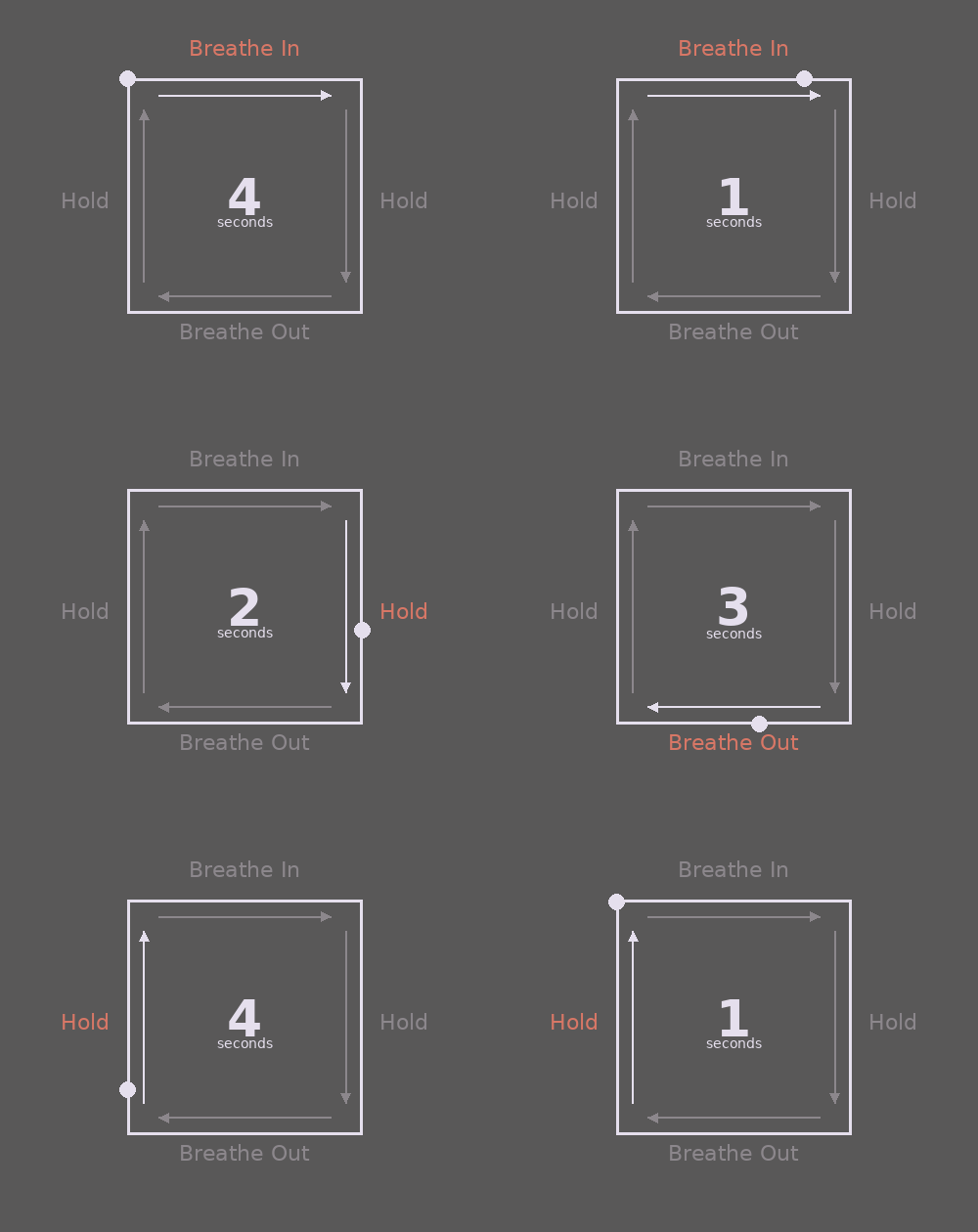
Try box breathing:
- Breathe in for 4 seconds
- Hold for 4 seconds
- Breathe out for 4 seconds
- Hold for 4 seconds
- Repeat several times (you can also just to any pace that is most comfortable for you)
Splash water on your face, step outside, or count slowly to ten. We recommend you check out and make us our StrongAfter Strength Toolkit.
Silently acknowledge: “I’m feeling angry, and I can manage this.”
Stepping away before things escalate can act as a circuit breaker. Let others know you’re taking a break and when you’ll return, and to be clear that you recognize a need to have important conversations and resolve difficulties in a respectful way.

Walking, running, swimming, or stretching can help discharge built-up energy.
Anger is often a mix of thoughts and feelings. One way to regain control is to gently unhook from it by becoming a mindful, curious observer. Notice how anger shows up in your body and thoughts, without justifying it or fighting it.
Trying to battle anger—or judging yourself for feeling it—often adds more frustration. Creating a little distance can help it pass more easily. For guided support, see the StrongAfter Strength Toolkit.
Pay attention to negative thoughts or commentary about someone or their actions, especially when you feel yourself getting worked up.
Spending time with thoughts that focus on the person who caused harm or with revenge are likely to significantly escalate feelings of anger. The reality is that they have already taken too much of your energy and time.

- Focus on positive self-talk
- Remind yourself of your ability to handle difficult situations
- Tell yourself: “This feeling and moment will pass.”
- Be encouraging: “I can handle this in a positive way.”
- Tell yourself: “The past does not control my future.”
Choose people who help calm and ground you, not those who fuel or encourage anger. Identify a good friend, supporter, or service who you can call and will assist you in getting back on course.
Part Two: Dealing With Thoughts of Revenge
Thoughts of revenge are more common among male survivors than many people realize. Research shows that fantasies of revenge—even violent ones—can appear after sexual abuse (Walker & Davies, 2005). Given that abuse and injustice has occurred, it is understandable that these thoughts can appear, confront, and consume survivors.
At StrongAfter, we recognize that it’s important that we find ways to support men who have been abused to deal with these thoughts in ways that don’t compromise their well-being.
Why Thoughts of Revenge Appear
Thoughts of revenge don’t come out of nowhere.
- Unacknowledged injustice
- Powerlessness
- A desire for accountability
- Cultural expectations about masculinity
Movies and social narratives can glorify a lone man “taking justice into his own hands.” Sometimes other men can unintentionally fuel or encourage this mindset. In reality, acting on revenge almost always causes more harm, especially to the survivor.
A Warning From Lived Experience
Men who have acted on revenge consistently report that it did not heal their trauma; it compounded it.
Thoughts vs. Actions
When it comes to revenge, it’s crucial to separate:
What crosses your mind
What you experience emotionally
What you choose to do
Thoughts shape how intense our feelings become and what actions feel possible.
For example, “He’s not worth my time or energy” is likely to lead to very different emotions and choices than “He got away with it and he has to pay.”
When deciding on the best course of action, it helps to start by grounding and calming your body, so your brain can work in your best interests.
Refocusing on Well-being
- What supports my long-term well-being right now?
- Where do I want my energy to go?
These questions act as a compass, helping redirect attention away from the person who harmed you and back toward your life.

Is there someone who genuinely has my best interests at heart and could help me think this through?
Reaching out to someone you trust for perspective can be incredibly valuable. And even if you don’t speak with them directly, imagining what they might say can help you see the situation more clearly and choose a wise path forward.
Living Well as a Form of Resistance
One survivor described realizing that the person who abused him had already taken enough. He chose to invest his energy in healing, relationships, and purpose instead. For him, living well became a powerful act of reclaiming control.
How Friends Can Help

Friends can help by acknowledging the hurt and the desire to do something, while avoiding language that fuels anger or revenge. While there is a clear difference between having thoughts and acting on them, spending too much time focused on anger or revenge can still take a toll on a man’s health and wellness.
When attention stays fixed on the person who caused harm, it pulls energy away from healing and from actions that support recovery. The person who committed the abuse has already taken enough; the person who most deserves positive attention in the long term is the survivor.
When to Seek Support
If anger or revenge thoughts feel overwhelming or persistent, know that you’re not alone, and that professional, nonjudgmental support is available.
- Process anger safely
- Reduce intrusive thoughts
- Rebuild a sense of control and meaning
You don’t have to carry this alone.
A Final Encouragement
Healing from abuse is a process. It’s normal to have ups and downs along the way. Be patient with yourself, and notice your progress, even when it feels small.
Disclaimer: The information on this page is general in nature and is not a substitute for professional advice. We encourage you to prioritize your safety and well-being and to consider seeking support from a qualified healthcare professional if needed.