
Emotions are part of everyday life. We’re all born able to feel a wide range of them, even if we don’t always know what they mean. The information on this page is designed to help you better understand your emotional world, build confidence in handling strong feelings, and get more connected to yourself and others.
In sharing this information, we recognize that gender expectations can shape how we relate to and express emotions, and that unwanted or abusive sexual experiences can intensify emotional distress in powerful ways.
- Expand emotional awareness, literacy, and vocabulary
- Understand how gender identity and trauma can impact emotional responses
- Strengthen skills for managing emotions and distress
- Learn patterns and preferred ways of responding
- Live more fully and more emotionally connected
Prioritize your well-being: At StrongAfter, we know that managing emotional responses—especially trauma-related ones—can be challenging. Keep prioritizing your well-being, take breaks as needed, and explore the StrongAfter Strength Toolkit for support.
Developing Emotional Literacy
The ability to identify, understand, and manage our emotions—often called emotional literacy—is a powerful life skill. Feeling and expressing emotions, and connecting with others emotionally, is part of living a full and meaningful life.

- Better mental and physical health
- Greater stress tolerance and resilience
- Stronger confidence and self-understanding
- Clearer communication and stronger conflict resolution
- Stronger, more supportive, and more connected relationships
Key Information
- An emotion is a physiological (happening in your body) response to stimuli—to events, interactions, thoughts, or memories.
- What we name an emotion shapes how we experience and respond to it.
- Emotions aren’t always singular. You can feel several emotions at once, like fear and excitement before jumping off a bungee platform.
- Hunting for the “real” or “core” feeling can sometimes produce more confusion than clarity
- Emotions offer information, worth noticing but not worth letting run the entire show.
- Emotions are not facts. Men who have experienced emotional manipulation as part of the abuse know this well.
- There’s no such thing as a “wrong” emotion. Some feelings are uncomfortable, but that doesn’t make them bad.
- “Good” or “okay” are not feelings; they’re evaluations of feeling states.
- Emotions vary in intensity, and some can feel especially heavy for survivors (See Confronting Shame: Addressing and Overcoming the Burden).
- Emotions can trigger memories, thoughts, or other emotions
Men and Emotions
Gender expectations shape how many men learn to deal with emotions.
- Being “in control,” repressing emotions, and containing emotional expression is equated with being a man.
- Men are often taught to hold back expressions of vulnerability, fear, pain, and emotional distress. By the time many boys are five or six years old, they’ve already absorbed the message that “boys don’t cry.”
- Women are often encouraged to express emotions such as fear or sadness more directly, but are taught to dampen feelings such as anger.
- Men are taught to see emotions as problems to “fix,” not experiences to feel.
- When emotions feel hard to manage, men may worry they look weak or “less of a man.”
Men’s efforts to appear strong, stoic, and in control can lead them to suppress, deny, avoid, or numb their emotions, often at the expense of their health and relationships. Over time, this can create a pressure-cooker effect: the more men try to keep emotions contained, the more overwhelming and out of control those emotions can feel.
Note: While it’s important to understand how gender expectations shape emotional responses, it’s also important to recognize that distress tolerance—the ability to stay calm and steady during high-stress situations or emergencies—is a genuinely valuable life skill, whether you work in emergency services, the armed forces, are parenting, or simply navigating everyday challenges.
Additional Challenges for Men Who’ve Had Unwanted or Abusive Sexual Experiences
Alongside the impacts many survivors share, men often encounter particular challenges after unwanted or abusive sexual experiences. Cultural messages about how men are “supposed” to feel or cope can make these experiences especially difficult.
Emotions connected to an unwanted or abusive sexual experience can be intensely distressing and hard to manage. Trauma responses like fear, helplessness, grief, panic, vulnerability, confusion, emptiness, anxiety, and dread can feel overwhelming and disempowering. They can also clash with traditional expectations of how men are “supposed” to act in the world, which can make the emotional impact even heavier.
Many men avoid talking about abuse because they fear falling apart emotionally or losing control and then being seen as “less of a man” for “not coping.”
Many men who were abused experienced emotional manipulation by the person who caused harm, which means certain emotional responses today can trigger distressing memories or reactions.
Some of the most troubling experiences for men who’ve survived abuse are emotions or body sensations that show up with little or no context. This can happen when the parts of memory that hold the facts—like time, place, or what happened—are absent. Many men describe these feelings as coming “out of the blue,” with no clear trigger. In those moments, it’s common to worry that you’re “losing it” or “falling apart,” even though these reactions are a normal part of trauma.
See our article and podcast Dealing with Flashbacks & Nightmares.
Another common reaction to sexual abuse that can increase distress is dissociation, which often looks like “checking out” or going emotionally numb. This freeze response, part of the body’s natural fight-flight-freeze system, is a powerful survival strategy and can show up again during stress. Many men struggle with this reaction because it doesn’t match cultural expectations of how men are “supposed” to respond, which can add even more confusion and distress.
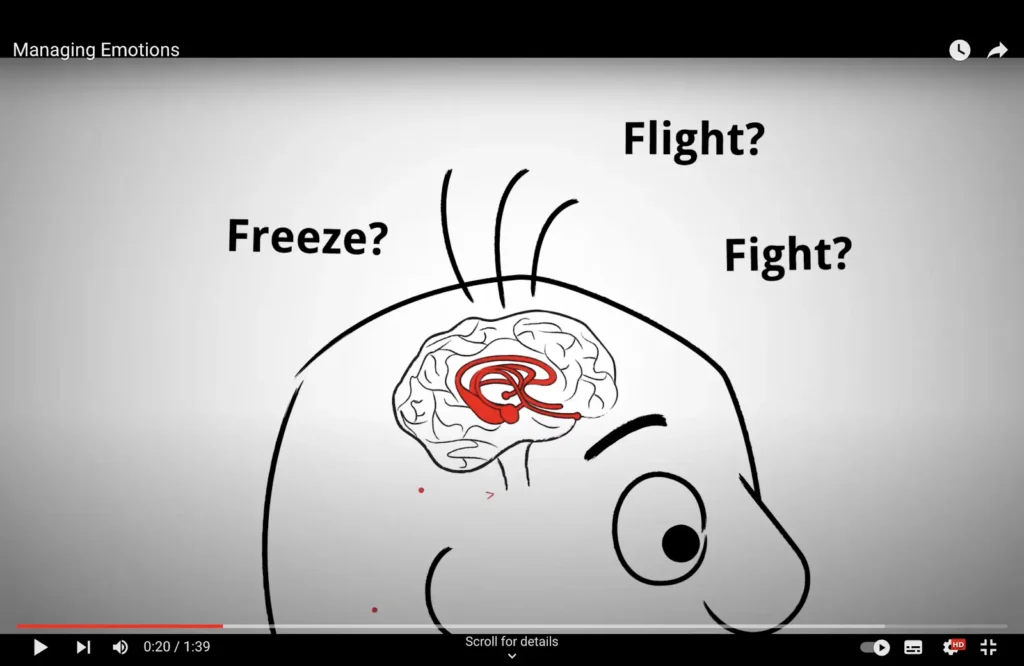
To better understand the “fight, flight, freeze” trauma response, this short explainer video by Phoenix Australia offers a clear and accessible overview: Watch the video here
Some men share that even the thought of showing emotional distress or crying while talking about what happened makes them worry about being judged—precisely at the moment when they would benefit most from empathy and compassion.
While male survivors may face these challenges, it’s important to remember that all of us have the capacity to grow in our awareness, develop new ways of managing emotions, and build fuller, more emotionally engaged lives.
Emotional Regulation & Calming the Nervous System
Developing emotional awareness and the ability to regulate our emotions are core life skills. When we build skills that help calm our nervous system and manage strong feelings, we’re better equipped to handle stressful or distressing moments when they inevitably show up. Emotional regulation gives us the space to think, choose how we want to respond and avoid slipping into automatic “just reacting” mode.
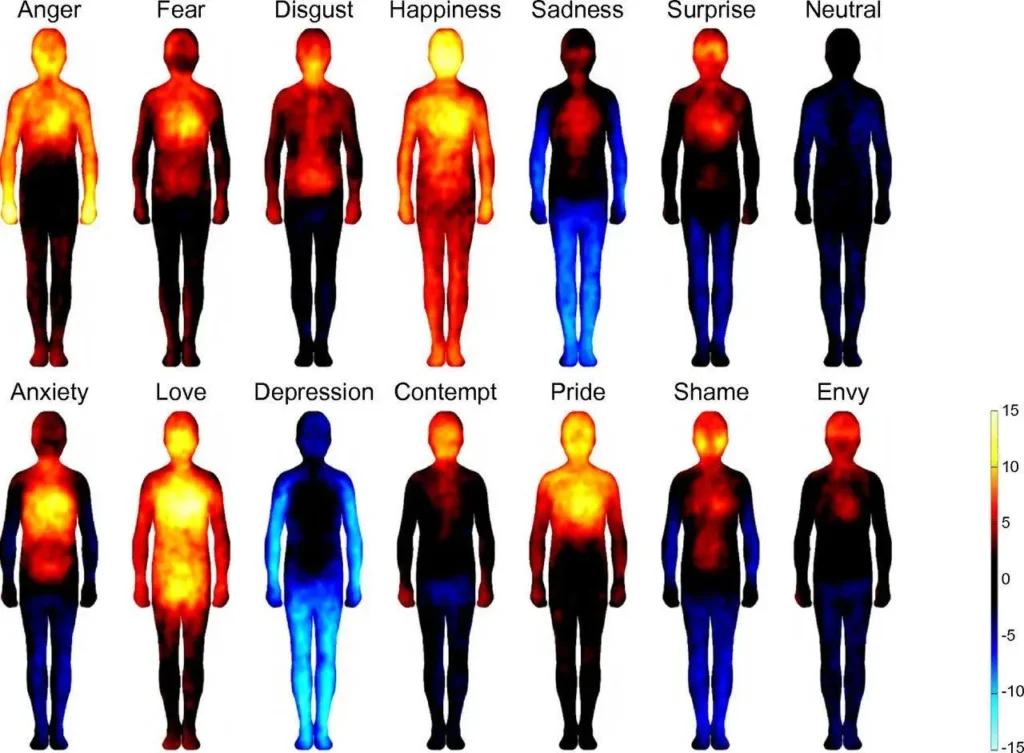
Emotions Live in the Body
Emotions are felt and physically experienced in our bodies. Different emotions show up with different sensations, in different places, and at different intensities. Even when emotions aren’t visible on the outside, we feel them internally. This physical—or physiological—side of emotions can even be seen in infrared body scans:
Safety First
When working to build emotional awareness and manage your responses, physical and psychological safety always comes first. If you notice that you’re feeling unsafe, your top priority is to remove yourself from the situation. Sometimes taking physical “time out” to create space and breathe can help you reset and regain a sense of safety.
When Emotions Feel Too Intense
Some emotional responses can hit so intensely that they overwhelm our ability to think or act. When that happens, it’s tempting to try to “think” your way out of the moment, but that usually doesn’t work. It’s far more helpful to start by calming your nervous system first.
Calming the Nervous System
One of the quickest ways to calm your body is to take a few deep breaths. More oxygen in your system helps you think more clearly, make decisions, and take action if you need to remove yourself from a situation.
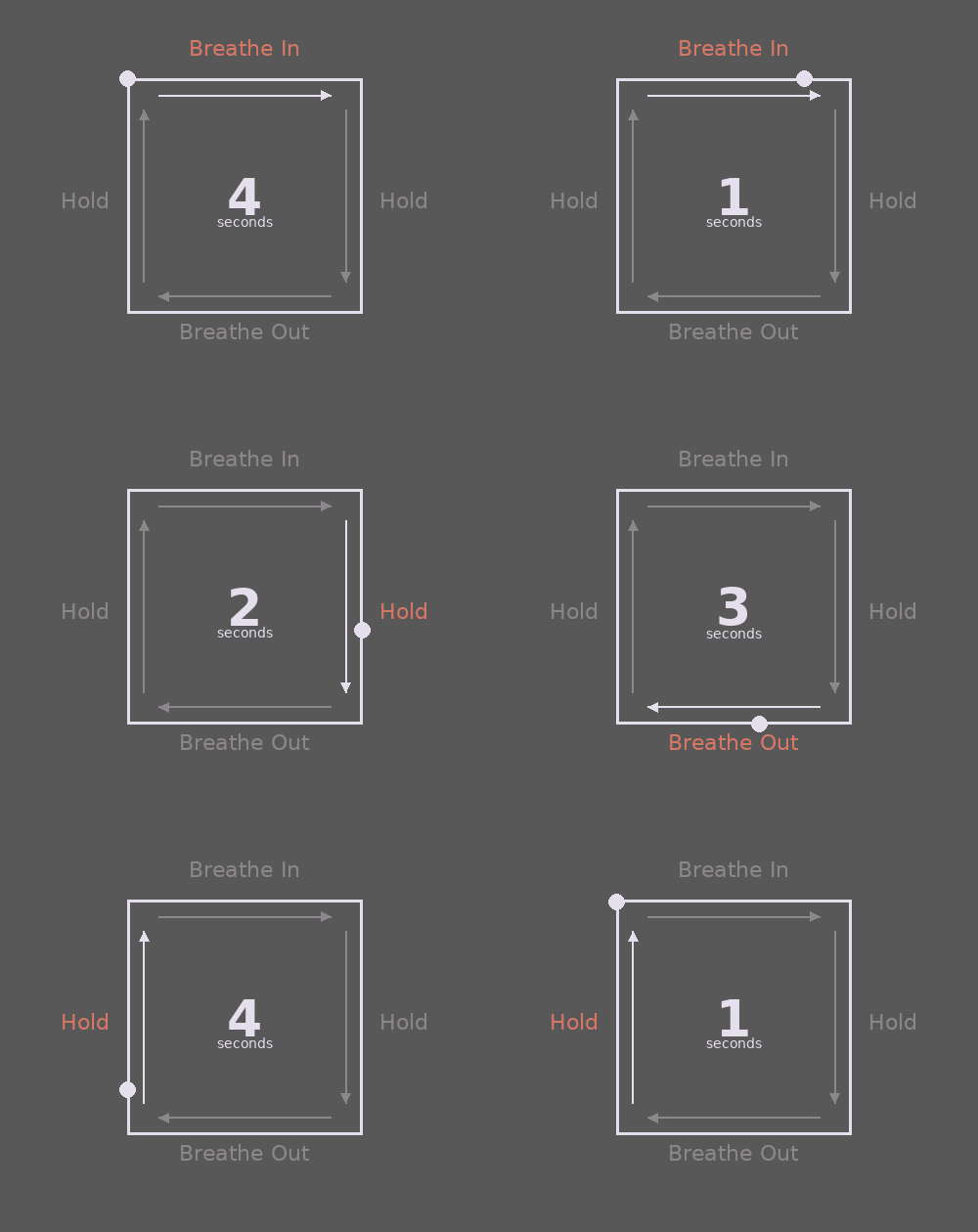
- Breathe in 4 seconds, hold 4 seconds, breathe out 4 seconds, hold 4 seconds. Adjust the timing as needed.
- Practice breathing exercises when you’re calm so they’re easier to use when you’re not.
Anchoring Yourself in the Present

- Splashing cold water on your face
- If possible, standing up and stamping your feet
- Going outside into nature
- Listening to a calming playlist
- Making a warm drink or sipping ice water
Adopt a Mindful, Observing Approach

- See an emotion as an emotion, not a fact.
- You don’t have to act on every feeling.
- You can sit with an emotion, breathe through it, and choose your next step.
- Exploring an emotion’s history can reduce its power.
- An emotion is something you feel, not who you are.
Explore more strategies for regulation and grounding in the StrongAfter Strength Toolkit.
Thoughts Influence Emotions
What we tell ourselves during emotional overwhelm matters. Many of us fall into unhelpful thinking patterns—catastrophizing, overgeneralizing, stewing, etc.— which can cause us to feel out of control. Learning to spot these patterns helps reduce distress.
Check out our StrongAfter article and podcast on Unhelpful Thinking Patterns & Basic Problem-Solving.
Encouragement & Distress Tolerance
We all need support to get through tough moments, and when emotions feel intense, positive encouragement can make a real difference. This isn’t the time to revisit past mistakes or beat yourself up. Instead, lean into self-compassion (check out the StrongAfter Strength Toolkit); it will serve you far better.
- Acknowledge the strengths you already have. You’ve managed intense feelings before, and you’ve pushed through difficult situations.
- Adopting a practical, “whatever it takes to get through this” mindset can be a real asset and helps build resilience. From that place of strength, you can continue growing your capacity to engage emotionally.
For more support, you may find this short Phoenix Australia video helpful: “Managing Emotions Tips.”
Emotionally Engaged Living
Living an emotionally engaged life means more than managing emotions—it means expanding your emotional world.
Increase Your Emotional Vocabulary
Learning about emotions isn’t just about control or regulation; it’s also about expanding your emotional vocabulary.
This can lead to “emotional funneling,” where everything gets squeezed into a few categories like sad, happy, angry, disgusted, surprised, or scared.
Just like learning any language, having a richer emotional vocabulary helps you identify and communicate your feelings more accurately. When you don’t have the words, it can feel isolating and confusing, and it can make conversations with partners, family, and friends a lot harder.
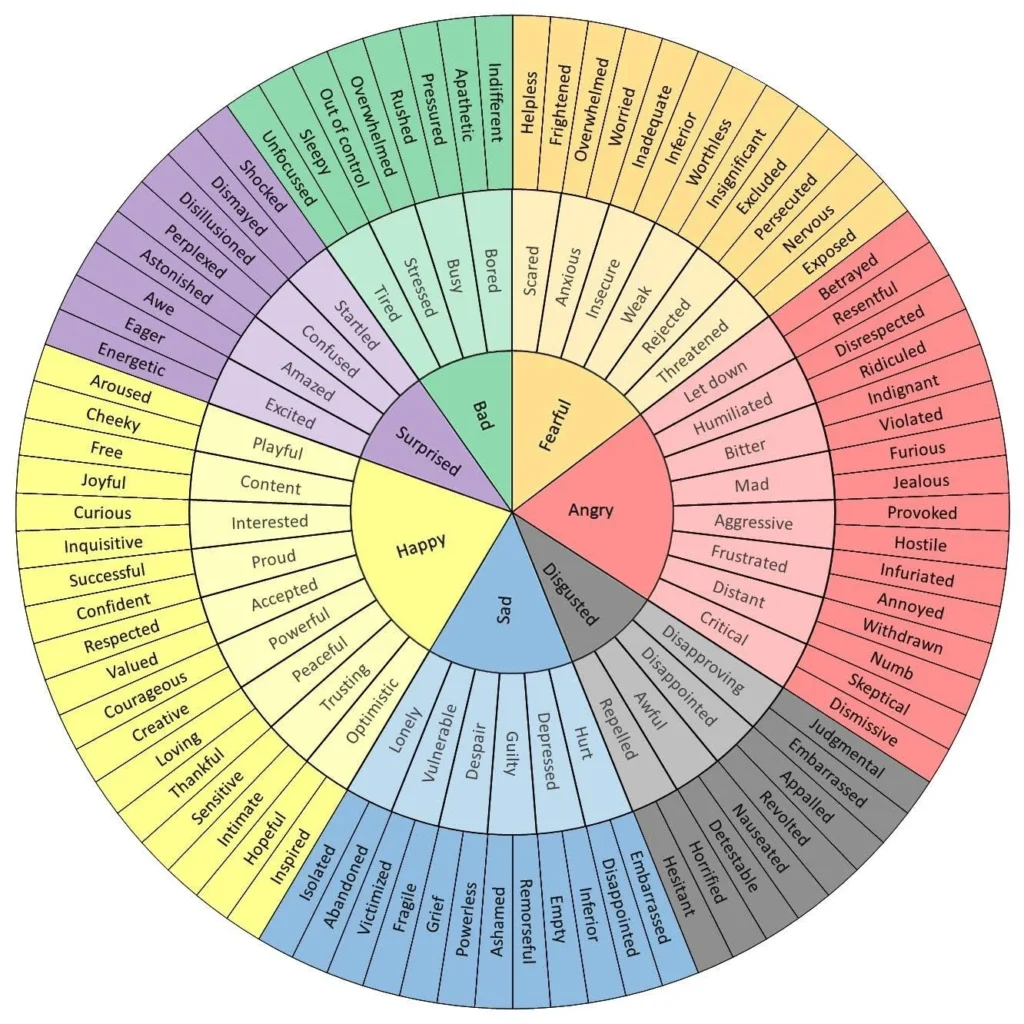
A useful tool that can assist us in expanding our emotional vocabulary is the Feeling Wheel designed by Gloria Willcox (1982).
Emotional Inventory
When you have some quiet time and feel safe and comfortable, spend a few minutes exploring the different emotions on the Feeling Wheel. Many people start at the center and work outward, noticing how emotions group together around certain themes.
- What did you learn about expressing emotions while growing up?
- Which emotions feel most familiar to you?
- Which emotions feel the least familiar?
- How do you usually calm or center yourself when emotions run high?
- What grounding strategies help support your distress tolerance?
As you work on expanding your emotional vocabulary, always prioritize your safety and well-being.
Identify How You Experience Different Emotions
Understanding how emotions show up for you is another important step. Each of us is unique, so we feel different emotions in different ways, in different parts of our bodies, and with different levels of intensity.
- What am I feeling right now?
- Where do I feel this emotion in my body?
- Can I name the feeling?
- Is it just one emotion, or a mix of several?
- Which emotion (or combination of feelings) on the Feeling Wheel comes closest to what I’m experiencing?
These small moments of awareness can help you better understand your internal world and respond with more clarity and intention.
Take Time to Identify Patterns
Emotions are a core part of being human, and learning how your emotional patterns operate can help you better navigate life. Some men find it helpful to take a semi-scientific approach, keeping a short daily log to track emotions, physical sensations, triggers, and responses.
This kind of log is designed to build awareness in the present, notice patterns over time, and understand your preferred ways of responding. It’s not meant to process trauma memories directly (see Dealing with Flashbacks and Nightmares), and your well-being should always come first when using it.
Emotions Log
-
- What physical sensations did you notice?
-
- Where in your body did you feel them?
-
- What stood out to you?
-
- What emotion(s) did you recognize?
-
- Which word fits best?
-
- Were there other emotions present? (Tip: check the Feeling Wheel)
-
- How strong was the emotion on a 1–10 scale?
-
- What was happening when the emotion appeared?
-
- What were you doing?
-
- Who else was around?
-
- Did someone say or do something?
-
- Does this emotion relate only to the present, or does it connect with a past experience? If so, how is this situation similar or different from that earlier experience?
-
- What thoughts were present?
-
- How did these thoughts influence the emotion
-
- How did you respond to the emotion?
-
- Does anything need to happen right now, or is noticing the emotion enough?
-
- What helped you feel grounded or calmer?
-
- Would it help to talk with a healthcare professional?
Keeping a log—whether in a journal, a notes app, or on your computer—can expand your awareness, help you see emotional patterns more clearly, and ultimately help you have more choice in how you respond.
Recording the full range helps you build a more balanced emotional picture over time.
Build a Bank of Positive Emotional Memories
We can all benefit from building a bank of emotional memories tied to happiness, fun, connection, closeness, strength, and resilience—moments we can draw on when we feel unsettled or overwhelmed. When emotions start to rise, recalling these positive experiences can help ground and reassure us that the intensity will pass.
Continuing Toward Emotionally Engaged Living
As we’ve said, everyone has the capacity to live a full and emotionally engaged life. Learning about emotions and understanding the important role they play isn’t just about control or regulation. It’s also about actively seeking out and participating in emotional experiences.
- Plan activities that bring pleasure or meaning. Make a list of things you’d like to do, places you want to visit, or people you want to spend time with. Notice what you feel as you engage in them.
- Gently stretch your comfort zone. Explore media, music, films, books, or experiences that move you emotionally in a safe, intentional way.
- Create small moments of quiet. Even a few minutes a day can help you slow down, tune in, and check what you’re feeling.
- Treat emotional awareness as useful information. Think of it as a personal barometer that can guide your well-being, choices, and relationships.
- Use an Emotions Log to record both the enjoyable and the difficult experiences so you learn from the full range.
- Grow your emotional vocabulary. Have supportive conversations where feelings are acknowledged without becoming the entire focus.
- Be proactive. Consider talking with a therapist or “professional listener” who can help you explore your emotions, patterns, and preferred ways of responding as you build a more emotionally connected life.
Final Thoughts
Learning about emotions is really about giving yourself more choice—about how you respond, what you lean into, and how you want to live. With curiosity, support, and practice, it’s possible to live a full, meaningful, and emotionally-engaged life.
Disclaimer: The information on this page is general in nature and is not a substitute for professional advice. We encourage you to prioritize your safety and well-being and to consider seeking support from a qualified healthcare professional if needed.