
Sleep and Emotional Well-Being
It restores the mind (improving things like memory and concentration), recharges the body, and helps steady our emotions.
But for many people—especially those navigating trauma, anxiety, work schedules, parenting, health issues, or nightmares—sleep can be complicated. But with some small adjustments and extra support (if that’s helpful), many people find they can get their sleep back on track.
Why Sleep Helps
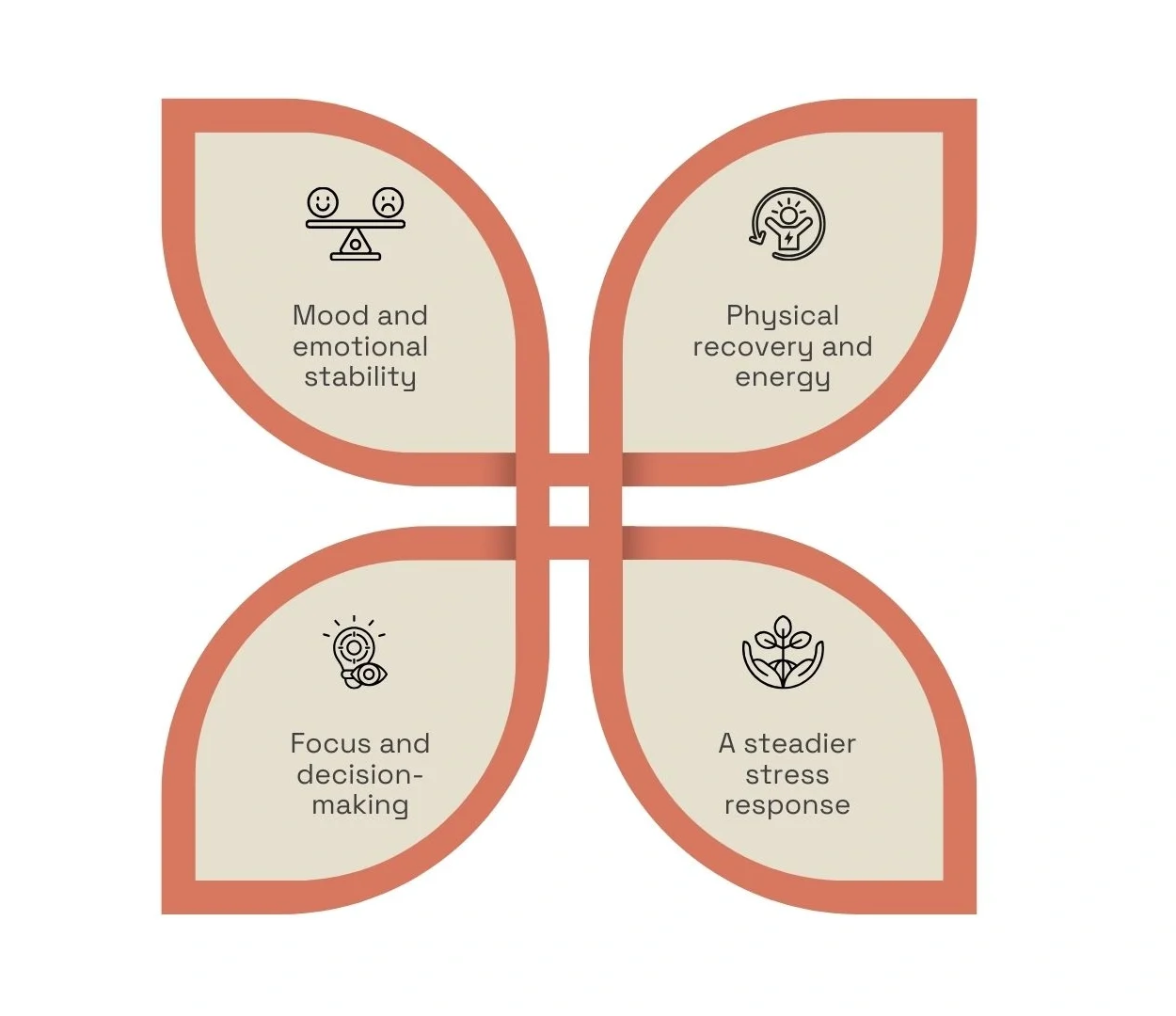
- Mood and emotional stability
- Physical recovery and energy
- Focus and decision-making
- A steadier stress response
If You Want to Improve Your Sleep

- Aim for a consistent routine, going to bed and waking up around the same time each day.
- Build a relaxing bedtime routine: stretching, listening to calming music, reading, or doing anything relaxing for 30 minutes before bed. Some people find white noise and sleep apps helpful, too.
- Limit screens or stimulating activities before bed, which can make it harder to fall asleep.
- Make the place you sleep as comfortable as possible.
- Avoid watching the clock, which can increase anxiety and make it harder to fall asleep.
- Get some natural light and/or add slow movement to your morning routine to help regulate your internal clock.
When to Seek Extra Support
If sleep has been challenging for a long time or is affecting your daily life, connecting with a healthcare provider, therapist, or sleep specialist may help. Everyone needs to rest, and support is out there.
Disclaimer: The information on this page is general in nature and is not a substitute for professional advice. We encourage you to prioritize your safety and well-being and to consider seeking support from a qualified healthcare professional if needed.