
No matter your life experience, it can be helpful to have simple routines on hand that steady your mind, calm your body, and bring you back to the present. Grounding and breathing exercises are just those kinds of routines.
They can help in moments of stress, when experiencing flashbacks, when memories feel intense, or when emotions start to feel overwhelming.
Calming and Connecting to the Present
Grounding works by helping calm your nervous system.
Many grounding techniques use the senses—sight, sound, smell, taste, and touch—to reconnect your mind and body to what’s happening right here, right now.
This can be especially helpful when trauma activates a fight-flight-freeze response, giving you a way to interrupt that cycle and reconnect with your sense of choice and control.
It can be helpful to build a small collection of grounding exercises to draw from, knowing that different strategies work for different people at different times. With practice, you’ll learn what works best for you, and you’ll have them at the ready. For many people, breathing exercises are often especially effective.
Below are a few grounding practices you can try.
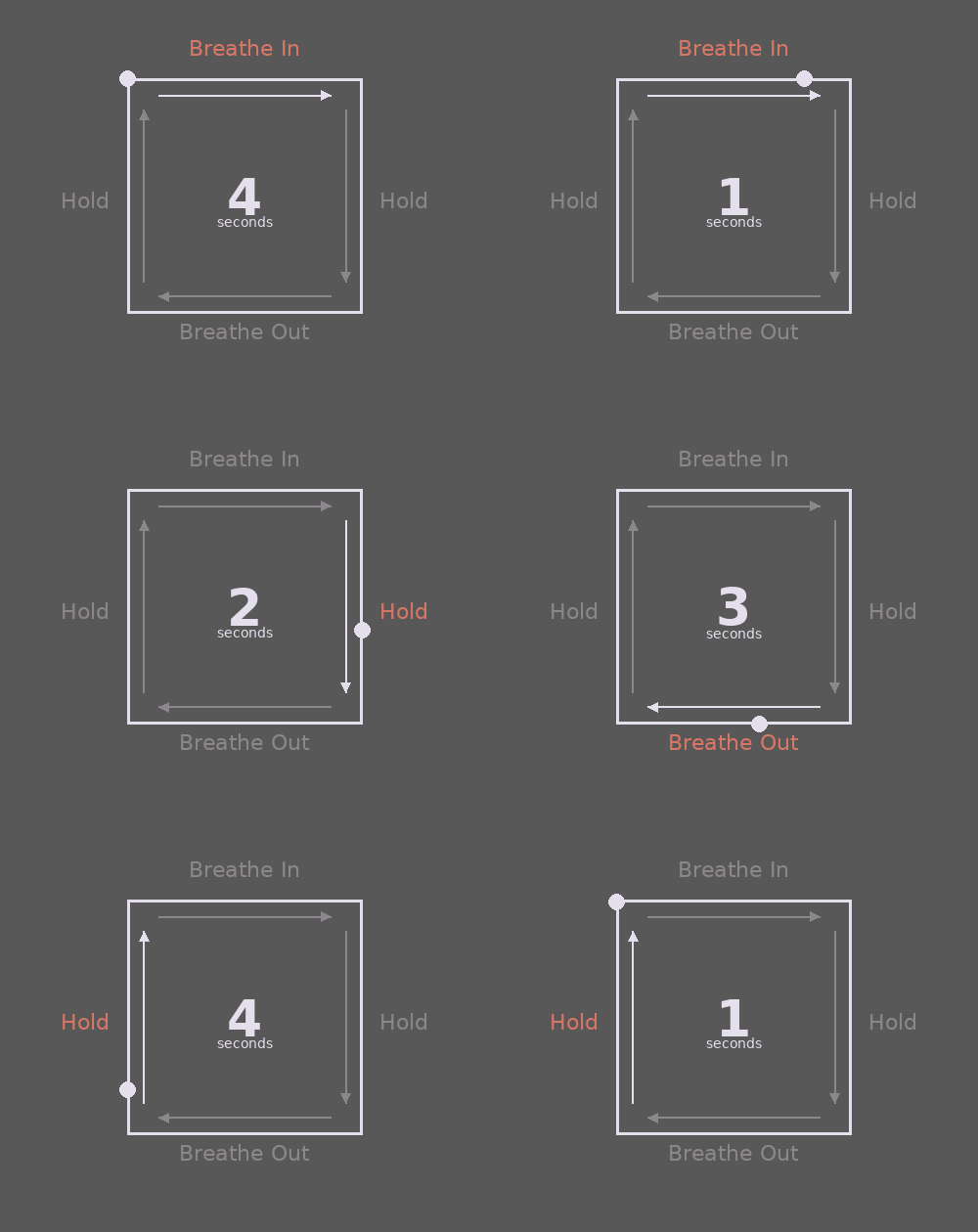
A simple breathing technique to calm your body:
- Breathe in for 4 seconds, hold for 4 seconds, breathe out for 4 seconds, hold for 4 seconds.
- Repeat at your own pace to gently calm your nervous system.
- Some people prefer the ‘3-4-5 Breath’ technique—breathing in for 3 seconds, holding for 4 seconds, and then breathing out for 5 seconds, or an extended version, the ‘4-7-8 Breath.’
- Use whichever breathing pattern feels most comfortable and calms you, adjusting as you wish.

Using a cup of tea, coffee, water, or any beverage, slow things down and:
- Notice the temperature; describe it in your mind
- Feel the texture and weight of the cup or glass, and how you hold it
- Smell the aroma; describe it in your mind
- Take a sip and notice the flavor; describe it in your mind
- Notice how you are sitting or standing
- Notice what you are seeing or hearing around you
This small moment of attention can be surprisingly grounding.
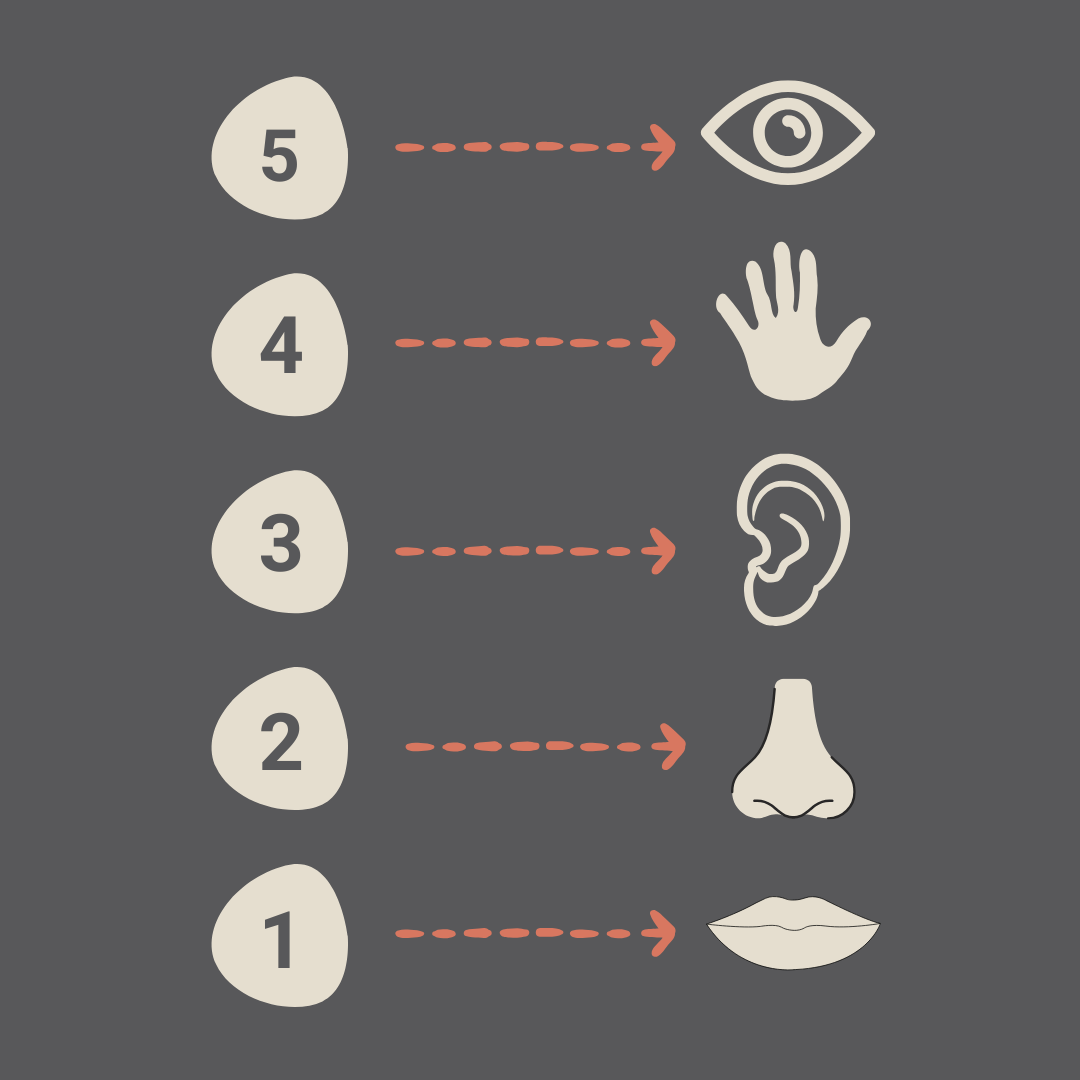
This exercise helps anchor you in the present moment through our senses. Take a moment to list:
- 5 things you can see
- 4 things you can touch
- 3 things you can hear
- 2 things you can smell
- 1 thing you can taste
No need to rush. Take your time noticing each item.

If it’s accessible to you, try gentle, mindful movement:
- Walk or move slowly, noticing each step or movement, one after the other
- Stamp your feet lightly
- Clap or rub your hands together
- Notice the sound and sensations in your body
Another option is temperature grounding:
- Place your hands in cool (or ice) water
- Splash your face or the back of your neck.
- Notice how it feels. Use words in your mind to describe the sensations.
Choosing What Works for You
There are a lot of grounding techniques out there, and you’ll find countless ideas online.
While grounding can be especially helpful when you feel overwhelmed or swept up in emotion, you may over time want to explore relaxation or mindfulness exercises as part of your regular routine.
Disclaimer: The information on this page is general in nature and is not a substitute for professional advice. We encourage you to prioritize your safety and well-being and to consider seeking support from a qualified healthcare professional if needed.